Grouper Slow on the Reef? Why Wreck Fishing Keeps Producing in Key West
QUICK ANSWER: When the shallow patch reef bite for grouper slows down off Key West, deeper wreck structure usually keeps producing because it holds a different mix of fish, more current, and far less pressure. Grouper are structure oriented ambush predators that relate to hard bottom at a wide range of depths, and wrecks give them cover, food, and cooler water that shallow coral heads cannot match on a hot or heavily fished day. A wreck trip typically mixes grouper with mutton snapper and amberjack, so the rods stay bent even when one species goes quiet. Matching bait, tackle, and boat position to the wreck rather than the open reef is what keeps a trip productive when the shallow bite falls off.
Your chum slick is drifting perfectly over a patch reef five miles off Key West. Yellowtail are flashing under the boat. And the rods still will not bend for grouper. It happens more than you would think. The shallow coral heads that produce all morning can go dead quiet for grouper specifically, even while snapper keep biting a few feet away.
That is usually the moment to pick up the anchor and run to a wreck. Grouper do not always follow the same schedule as everything else feeding that day, and there is a real reason for it. Once you understand why deeper, harder structure keeps producing when the reef goes flat, planning a trip gets a lot easier. It is the difference between grinding out a slow afternoon and filling the cooler somewhere else close by.
Why the Shallow Reef Can Go Quiet for Grouper
Grouper are ambush feeders. They hold tight to a hole, ledge, or piece of structure and wait for bait to drift past instead of chasing it down in open water. A shallow patch reef is often small, shared by a dozen boats over a season, and sitting under warmer surface water for most of the day. Pressured or overheated fish tend to hold deeper in the structure or move off it entirely. That is why the bite can feel like it just shuts off, even as the reef still looks alive with smaller species swimming around.
Pressure Adds Up Fast On Popular Spots
A well-known patch reef near the marina gets fished by multiple boats most days. Grouper learn quickly, becoming cautious after repeated drops and previous hook-and-release encounters.
Warm Shallow Water Pushes Fish Deeper
Grouper prefer cooler water than warm surface layers over shallow reefs. During warmer months, they often move toward deeper drop-offs or nearby wrecks where bottom temperatures stay cooler.
Structure matters more than the water above it. According to NOAA Fisheries, adult gag grouper prefer hard bottom habitat including reefs and wrecks, along with ledges and depressions, over open sand or grass. When the shallow structure they are using gets picked over, they relocate to the next quality piece of hard bottom. A wreck is exactly that.
What a Wreck Offers That a Patch Reef Does Not
A sunken wreck is a different environment than a natural coral head, even sitting at a similar distance from shore. The size, shape, and history of the structure change how fish use it, and it shows the moment you drop a bait.
More Vertical Relief Means More Ambush Points
A wreck’s hull, deck, and debris create layered shadows, current breaks, and hiding spots. Grouper can hold deep, strike passing bait, and retreat without remaining exposed.
Wrecks Trap Bait Instead Of Just Holding It
Current moving across wrecks pushes baitfish and crustaceans against structure, where predators can feed. That concentrated food supply keeps grouper and other species actively working the wreck.
Fewer Boats Find And Fish Wrecks Well
Productive wrecks require electronics, experience, and time to locate and read. Our captains rely on proven numbers developed over seasons, while continuing to test newly discovered wrecks carefully.
Depth Adds A Layer Of Security Fish Respond To
Deeper wrecks place grouper farther from surface light, boat noise, and warm water. Combined with substantial cover, that depth can keep fish feeding after shallower reef fish become inactive.
TIP: A slow morning on the shallow reef is worth treating as information rather than a wasted stop. If yellowtail and mangrove snapper are still biting but grouper have gone quiet, that is often the signal to shift toward wreck structure instead of working the same shallow spot longer.
The Biology Behind Why Grouper Favor Deep Structure
Grouper are not simply avoiding boat traffic. Their life history explains a lot of what happens on the water, and some of it surprises people who have fished for grouper for years without knowing it.
They Grow Slowly And Live A Long Time
Gag grouper can live as long as 30 years and grow past 3 feet in length, according to NOAA Fisheries. A fish that old and that large did not get that way by sitting exposed on shallow structure, facing constant fishing pressure and bigger predators.
Here is the part most anglers never hear about. Gag grouper begin life as females and mature around age 4. A portion of the population then changes to male around age 8, per NOAA Fisheries. Older, larger fish, which include most of the males, tend to hold on the biggest and deepest structure available. That is frequently a wreck, not a shallow coral head.
Black And Red Grouper Both Key On Hard Structure
Black grouper commonly run two to three feet and ten to twenty pounds, occasionally topping one hundred pounds, while red grouper typically stay smaller, around one to two feet and five to ten pounds, according to Key West area fishing guides. Both species show up most consistently near ledges, rocks, and wrecks rather than open bottom. That is exactly the kind of structure our reef and wreck trips target.
Young gag grouper live a completely different life than the adults you are trying to catch. NOAA Fisheries notes that juveniles spend their early months in estuaries among seagrass beds, oyster reefs, and shipwrecks close to shore before moving offshore to hard bottom as adults. That life cycle is part of why a mature grouper pulled off a Key West wreck tends to be a genuinely large, well conditioned fish.
How We Work a Wreck When the Reef Goes Quiet
Fishing a wreck well is a different job than chumming a patch reef. The adjustments are small on paper but they change results fast.
We drop baits tight to the structure, not near it
Grouper strike fast and try to bury back into the wreck the second they feel the hook. Getting a bait as close to the structure as current and depth allow, without snagging, puts it in front of fish that will not move far to eat.
Heavier tackle stays rigged and ready all day. Wreck fishing calls for stouter rods, stronger line, and a heavier drag setting than typical reef snapper fishing, because the first move a hooked grouper makes is straight back into the structure. Winning that first few seconds is what actually gets the fish to the boat.
We anchor or drift depending on the wreck and the day
Some wrecks fish best anchored directly over the structure, holding a bait in one precise spot. Others produce more when we drift across them to cover a wider area and find where fish are stacked that day. Current, wind, and the shape of the wreck all factor into that call.
Live bait usually wins over cut bait on a wreck stop. A lively pinfish or grunt worked near the bottom triggers a faster, more aggressive strike from grouper and amberjack than a stationary piece of cut bait, especially once fish have already seen pressure on nearby structure.
WARNING: A hooked grouper that reaches structure before it can be turned is almost always lost, tackle and all. Keeping steady upward pressure the instant a fish bites, instead of letting it run, is what actually decides whether it comes up or wins the fight down in the wreck.
Species That Round Out a Wreck Trip
A wreck rarely produces just one species. That is part of what makes it a solid backup plan when grouper alone are the target.
Mutton Snapper Hold Tight To Wreck Edges
These reef bruisers pull hard and respond well to live and cut bait fished near the bottom, especially once the tide starts moving and pushes them up onto the structure to feed.
Amberjack patrol the water column above the wreck rather than sitting on the bottom. Pound for pound they are some of the hardest pulling fish on Key West structure, and they will often eat aggressively even on days when bottom species like grouper are holding tight and feeding cautiously.
Cobia And Triggerfish Show Up As Bonus Catches
Depending on the season and depth, a wreck stop can also produce cobia cruising the structure or triggerfish picking at bait, rounding out a day built around grouper and snapper.
Frequently Asked Questions
Is wreck fishing better than reef fishing for grouper near Key West?
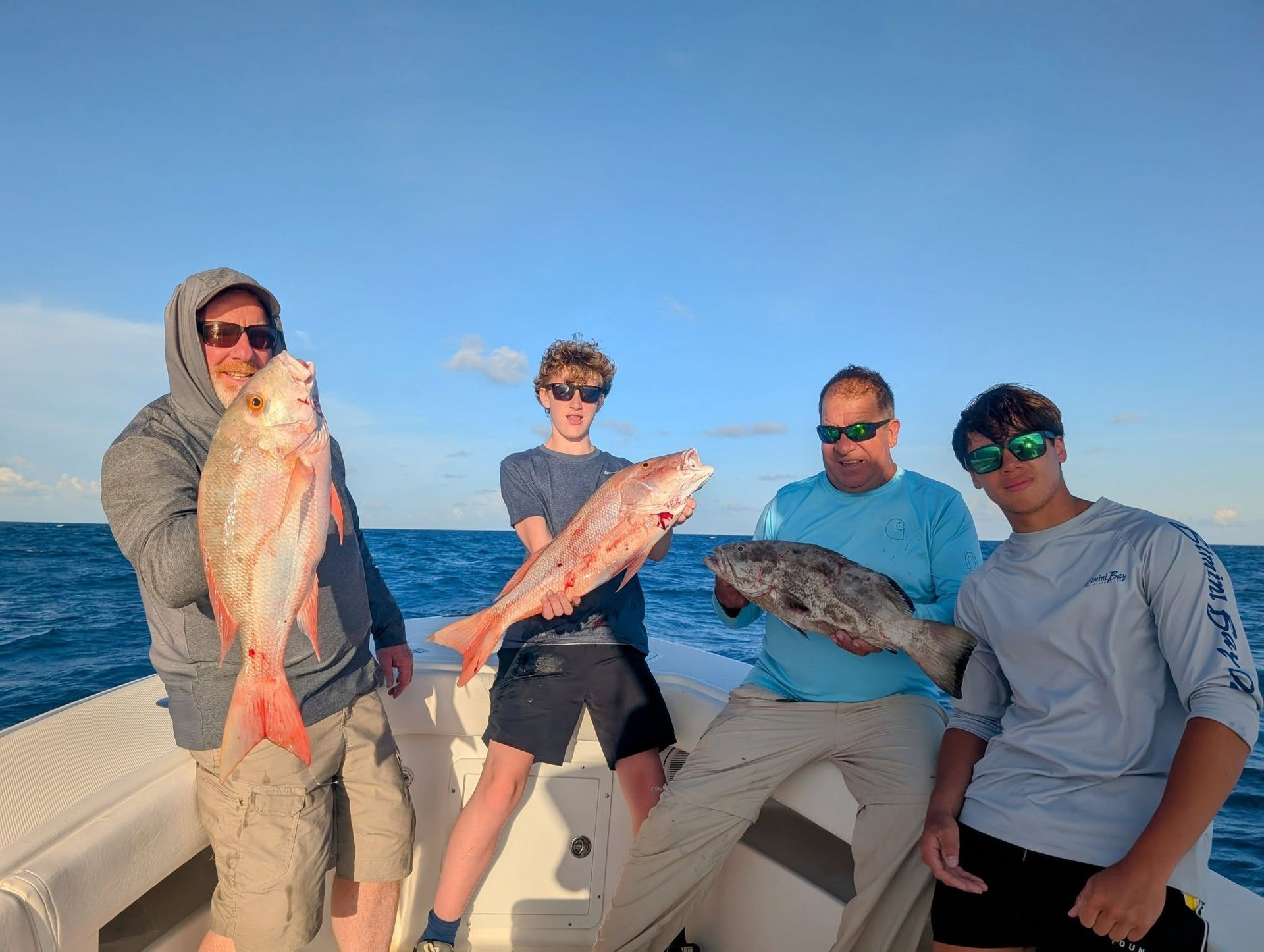
Neither wins outright. Shallow patch reefs are great for yellowtail and other schooling species and can hold grouper too, but wrecks tend to keep producing grouper specifically once the shallow structure slows down, thanks to their depth, cover, and steady current.
What depth are the wrecks fished on a typical Key West reef and wreck trip?
Depth varies by wreck and by target species, and our captains pick the spot based on conditions and what is actively feeding that day. In general, the wrecks we fish sit meaningfully deeper than the main reef line, which is part of why they hold different, often larger fish.
What bait works best for grouper on a wreck?
Live bait such as pinfish or grunts fished tight to the bottom.
Can beginners handle a wreck fishing trip for grouper?
Yes. Our crew rigs the tackle, sets the drag, and talks anglers through the fight from the first bite to boatside, so someone fishing structure for the first time can still compete for a quality grouper or amberjack.
Do you anchor or drift when targeting grouper on a wreck?
It depends on the wreck, the current, and how fish are positioned that day. We anchor directly over some structure to hold a bait precisely in place, and drift across larger or more spread out wrecks to cover more ground and find where the fish are stacked.
What other fish might we catch on a wreck trip besides grouper?
Mutton snapper, amberjack, cobia, and triggerfish all show up on the same wreck structure that holds grouper, so a trip built around grouper usually ends up with a mixed, interesting box of fish.
Reading the Reef and Knowing When to Move
A quiet stretch on the shallow reef rarely means the fish have stopped feeding. It usually means grouper have shifted toward structure that offers more cover, cooler water, and steadier current, conditions a wreck provides that a shallow patch reef cannot match once pressure or heat sets in. Reading that shift, rather than grinding out the same spot, is what separates a slow afternoon from a full cooler somewhere close by.
Florida Straits Sportfishing
has spent 15
years
learning which wrecks keep producing off Key West, FL, when the shallow bite goes quiet. That knowledge, built through years on these grounds, is what lets a trip pivot quickly instead of losing hours to a spot that has already gone cold. Matching the right structure to the day's conditions is what keeps rods bending well past the reef.
Recent Posts